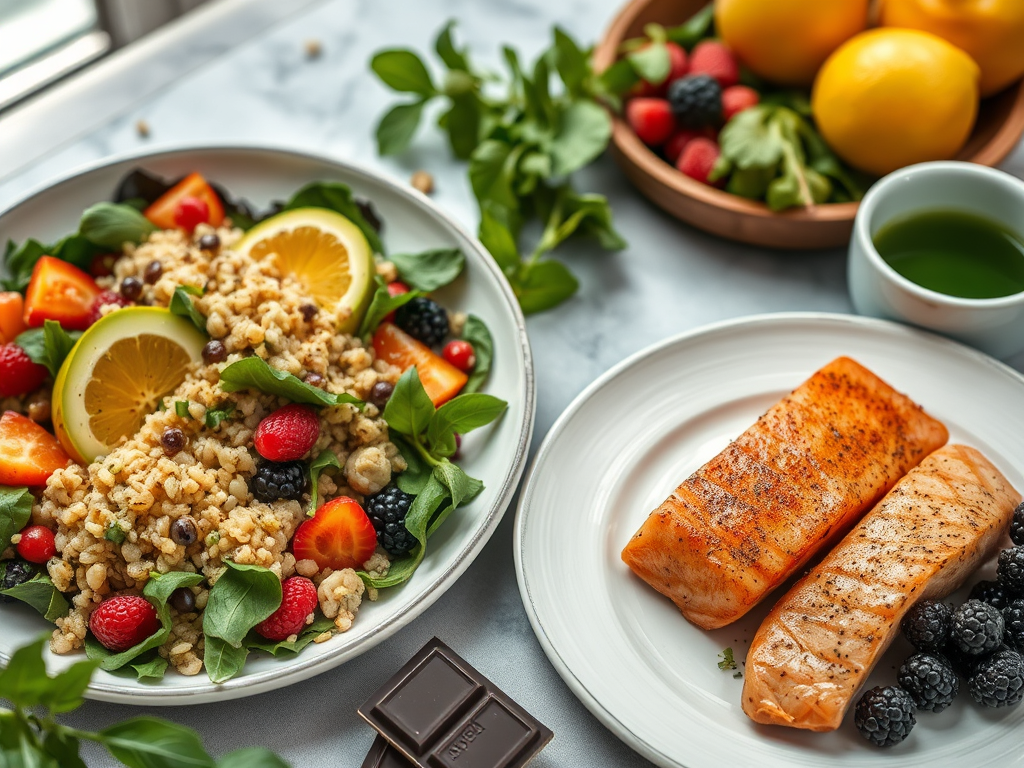
Nutrition’s Role
Your diet profoundly shapes brain function, mood, and long-term cognitive health. A Mediterranean-style or traditional Japanese diet—rich in whole foods, healthy fats, fiber, and antioxidants—is linked to lower depression rates and improved brain function . Micronutrients like B‑vitamins, vitamin D, C, and magnesium also support cognition and mood Reddit+5verywellmind.com+5Reddit+5.
🍽️ Smart Food Tips
- Omega-3s: Eat fatty fish (salmon, sardines) or plant sources like chia, flax, walnuts. They boost serotonin and ease depression .
- Fiber & Prebiotics: Whole grains, legumes, fruits, veggies fuel gut health, influencing mood via gut-brain communication .
- Polyphenols & Antioxidants: Berries, dark chocolate, leafy greens, green tea protect from inflammation and cognitive decline Reddit+5verywellhealth.com+5MDPI+5.
- Micronutrient Rich Choices: Include oranges (vitamin C), leafy greens (B‑vitamins, folate), nuts/seeds (magnesium, vitamin E).
- Fermented Foods: Yogurt, kimchi, miso boost probiotics and support the gut‑brain axis .
🥙 Sample Day of Mood-Fueling Meals
- Breakfast: Oat porridge with chia, walnuts, berries, and yogurt.
- Lunch: Quinoa salad with leafy greens, salmon, avocado, mixed seeds.
- Snack: Dark chocolate square + green tea or energy balls with blueberries & oats .
- Dinner: Miso soup, grilled fish, side of steamed veggies and fermented greens.
🧠 The Science
- Synergy between omega-3s, polyphenols, and fiber enhances cognitive function and reduces inflammation .
- Higher intake of whole grains, nuts, and oily fish correlates with lower depression and better brain health .
✅ Tips for Readers
- Start with one change: add a serving of berries or swap chips for nuts.
- Maintain variety: rotate vegetables, whole grains, and protein sources.
- Stay hydrated—water is essential for brain function .
 Site Title
Leave a comment